

There is a great short video by “East Coast Sailing” which recommends our Boat Beacon & SeaNav apps, and includes a very novel and useful way of using a SeaNav route to plan and explore the weather (wind and waves) on the route using full screen Windy on a laptop. Well worth the watch.
Category: seanav
SeaNav – Portuguese charts
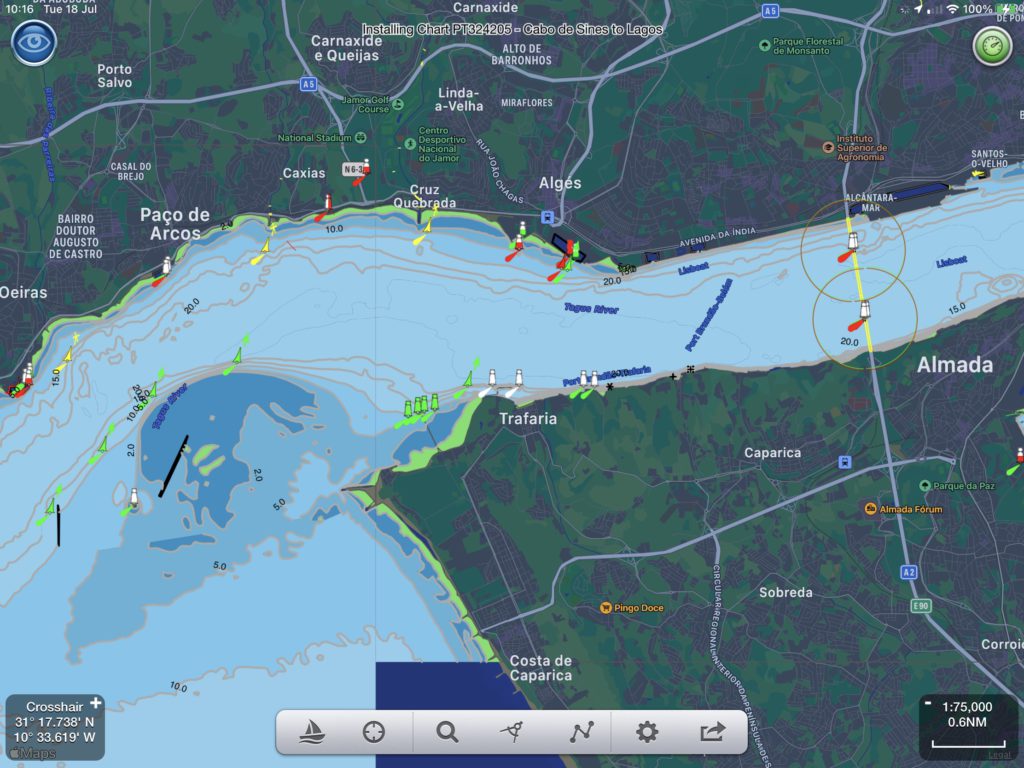
SeaNav now has vector charts available for Portugal, The Azores and the Madeira islands based on the latest official Hydrographic Office data. These work seamlessly together with the existing charts for Spain and France. The charts include the full range of scales down to harbour approaches.
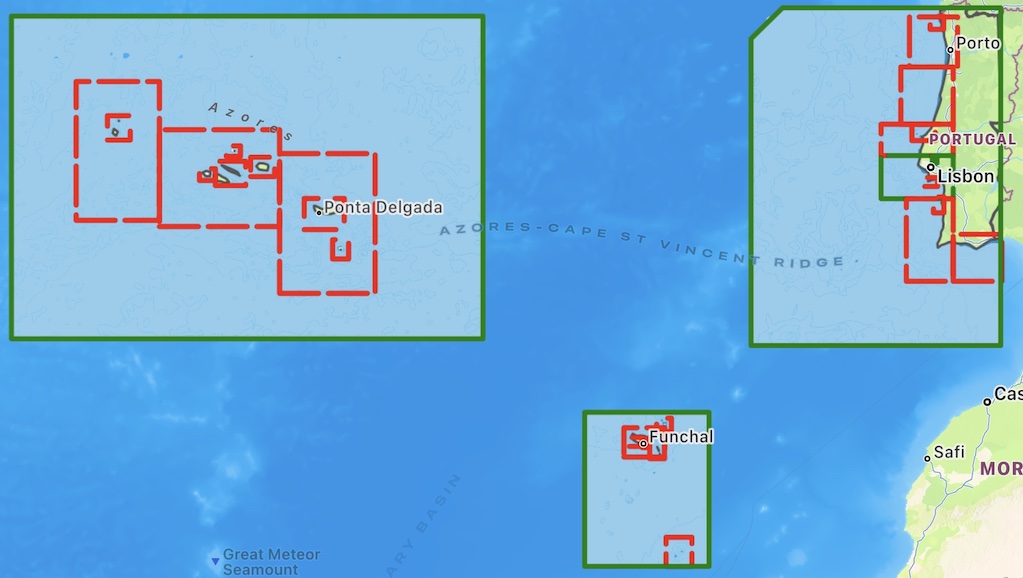
You can download the new Portuguese charts now by going to Settings in SeaNav and selecting SeaNav Chart Store/Portuguese Charts.
SeaNav – Export and import routes via email
The simplest way to share a route with one of your other devices is to export a route via email to an email address you can read on the other device. The other way is to use Dropbox if you have a Dropbox account. Dropbox is bit more “automatic” once you have logged in and lets you browse your saved routes.
This article explains how to do it via email.
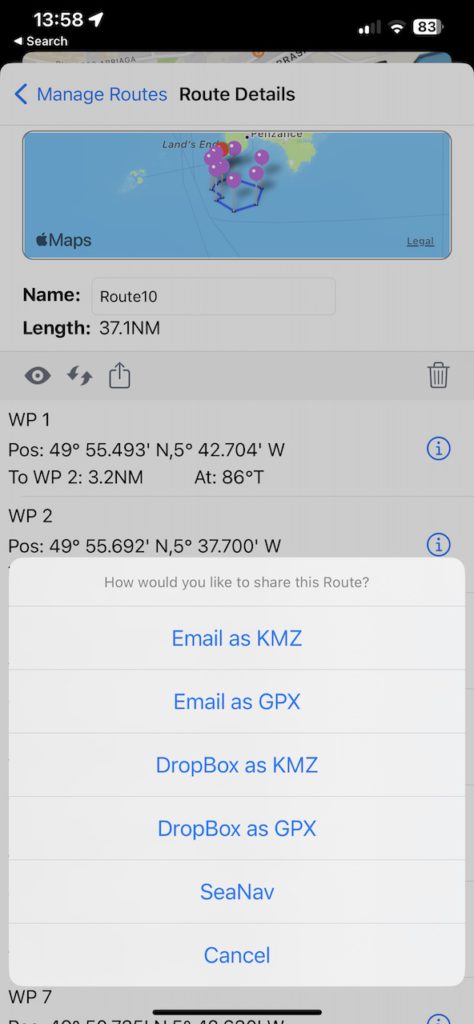
Tap the “zigzag” routes icon on the bottom toolbar and select Manage routes. Select the route you want to export by tapping the i button on its right. Then tap the share icon on the left toolbar ( square with arrow pointing out of it). Select Email as kmz and then fill out the email address to send to.
Open the email on your other device. When you open the email there will be a kmz file attached at the bottom of the email. Tap the kmz file image to download it
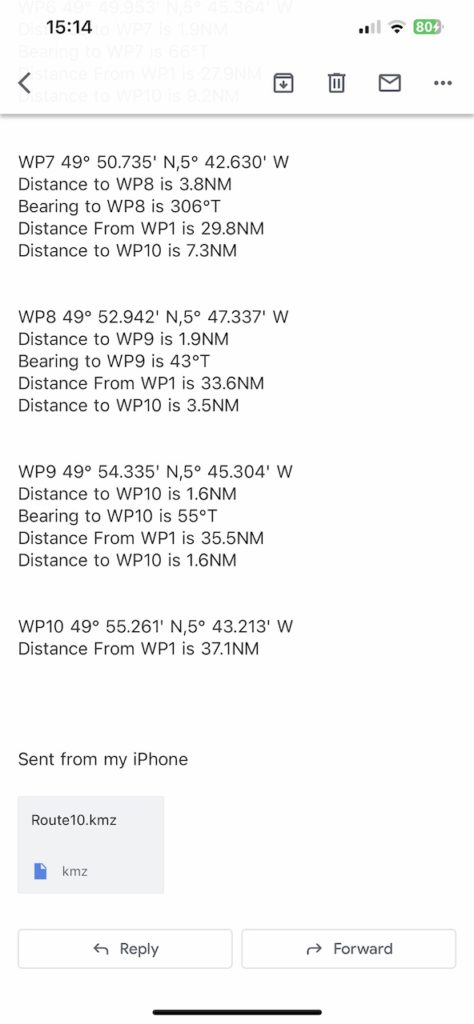
and then tap the share button bottom left to open it (2) .
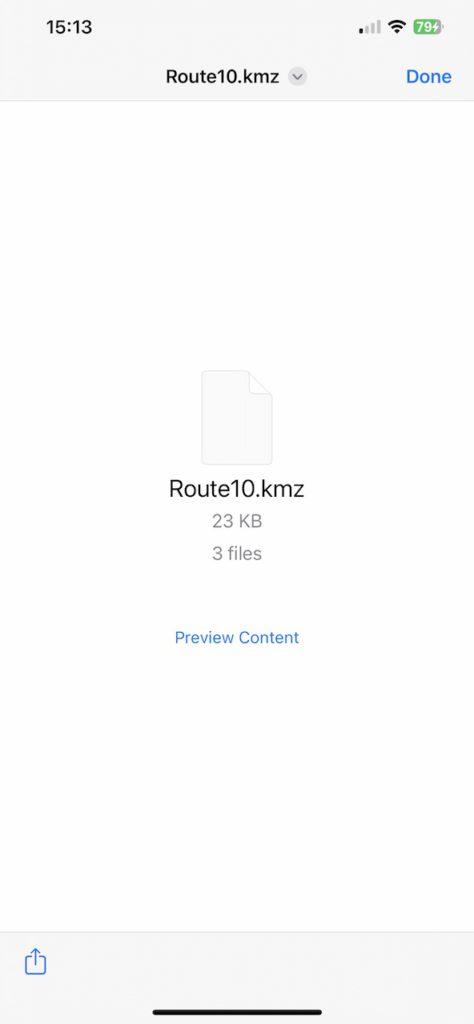
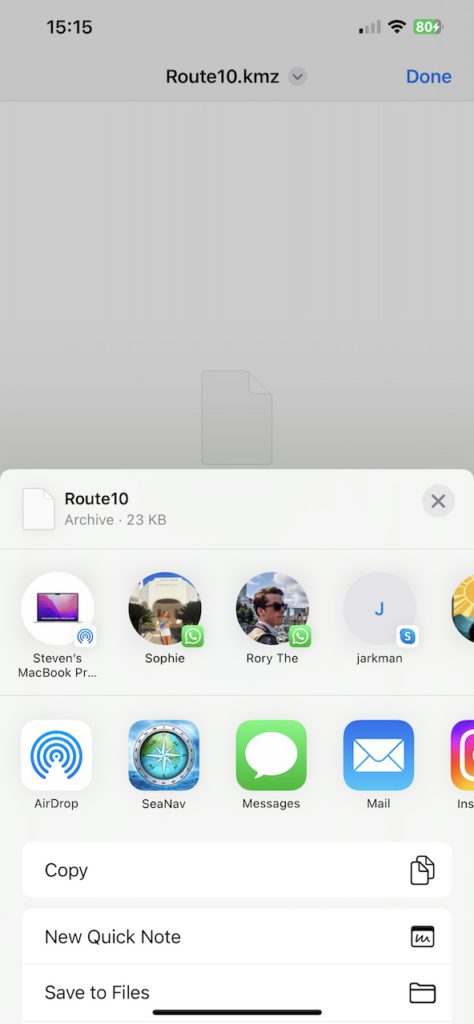
Choose what you want to open the download with – scroll along or tap more if you can’t see SeaNav in the initial list of icons – choose SeaNav and it will import it and open SeaNav on the new route.
SeaNav and an autonomous boat
Read about the latest development with SeaNav and the autonomous boat here
We have downsized the Pocket Mariner test boat from a catamaran cruiser to a catamaran dinghy (Dart 18) and are doing our bit for Net Zero and our ears with an electric outboard.
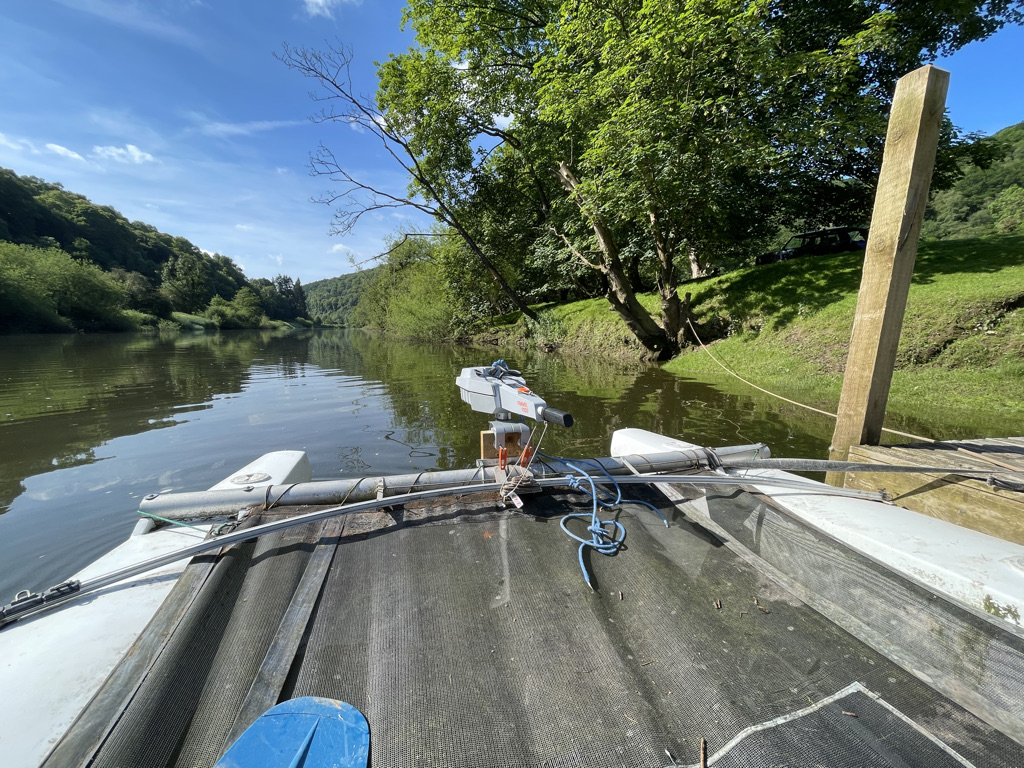
We chose the Torqeedo 1103C which has slightly more power than an e-Propulsion and also had the benefit of being available rather than on a 6 month back order. It is a revolution compared to a petrol outboard. Totally silent apart from the sound of water flowing past the hull, instant start, no oil or smelly petrol and fumes. A real joy, here is it in action on the river Wye:-
As well as using the test boat for testing our marine navigation apps we got inspired to take the boat to the next level and see if we could automate it and ultimately use SeaNav to control it to follow a SeaNav route.
Two steps:-
- A bluetooth LE enabled autohelm attachment to control the outboard direction
- Add the bluetooth driver capability to SeaNav and get it to maintain course and change course at Waypoints.
A possible 3rd step is to add a remote throttle control too so we can go fully autonomous!
This article covers step 1.
Step 1. Bluetooth iOS remote for Navico TP5000
Autohelm units are very expensive ( over £400) and none offer remote bluetooth control. We couldn’t find one that supported remote NMEA0183 control either. So we bought a second hand Navico TP5000 unit off eBay and adapted it to support Bluetooth using an Arduino BLE nano33 board and 3 relays attached inside the housing to the switches. The project design, instructions and code is here https://github.com/electricpocket/autopilot. This could also be adapted to control a Raymarine Autohelm unit.
Here is the Navico TP5000 in manual mode attached to the boat and Torqeedo outboard:-
and here is the TP50000 controlled with our iPhone autopilot app:-
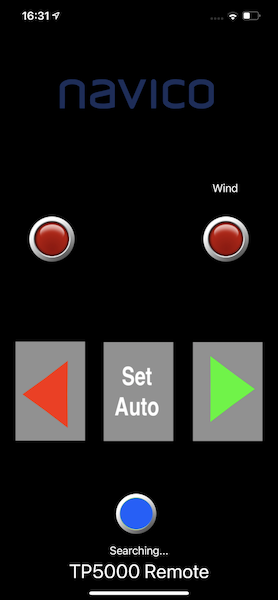
Next is to test this on the water and then move on to Step 2…..here
Please contact help@pocketmariner.com if you have any questions or suggestions.