SeaNav Autopilot (aka SeaNav and the autonomous boat part 2)

Automatically follow your route with SeaNav’s autopilot mode. SeaNav can control Raymarine and Navico/B&G/Simrad/Lowrance auto tillers and helms to sail a SeaNav route. You can also use SeaNav on your iPhone or Apple Watch as a remote control for your Raymarine Tiller and Wheel Pilot
Please note the SeaNav autopilot feature is currently in Beta and requires an NMEA to WIFI adapter like this NMEA3WIFI gateway . Drop us an email to help@pocketmariner.com if you would like to take part in the Beta program.

Here is a demonstration sailing a SeaNav demo route in the Pocket Mariner’s shore based lab with a Raymarine ST1000+ Tiller pilot.

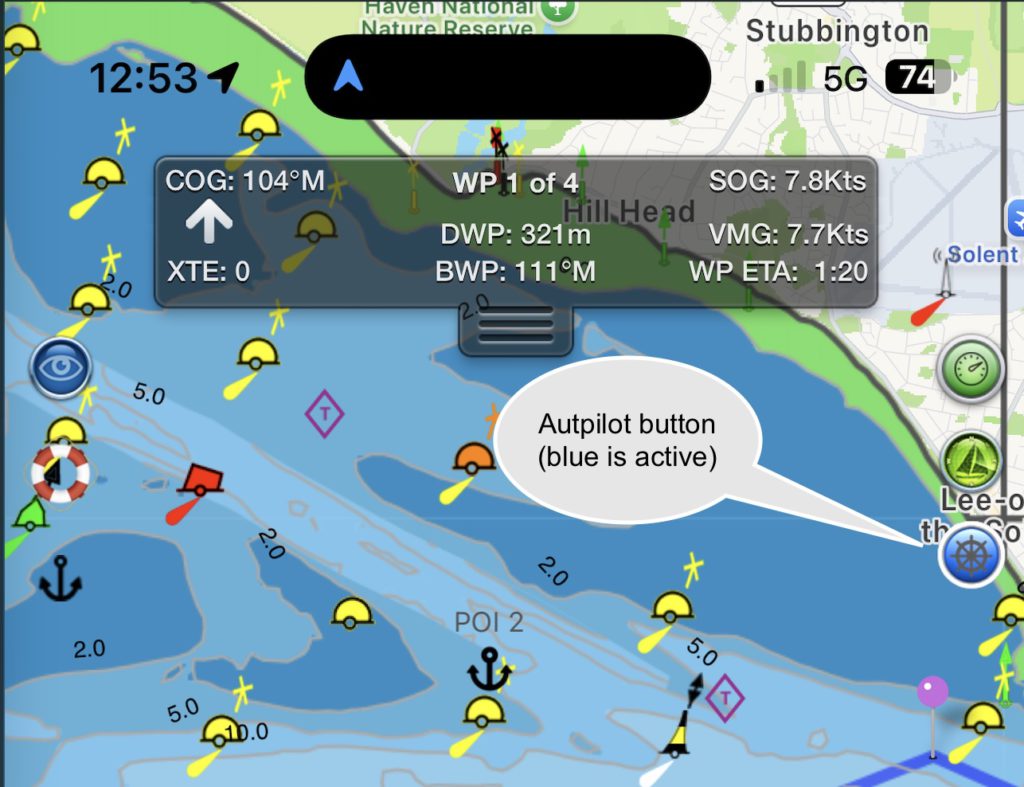
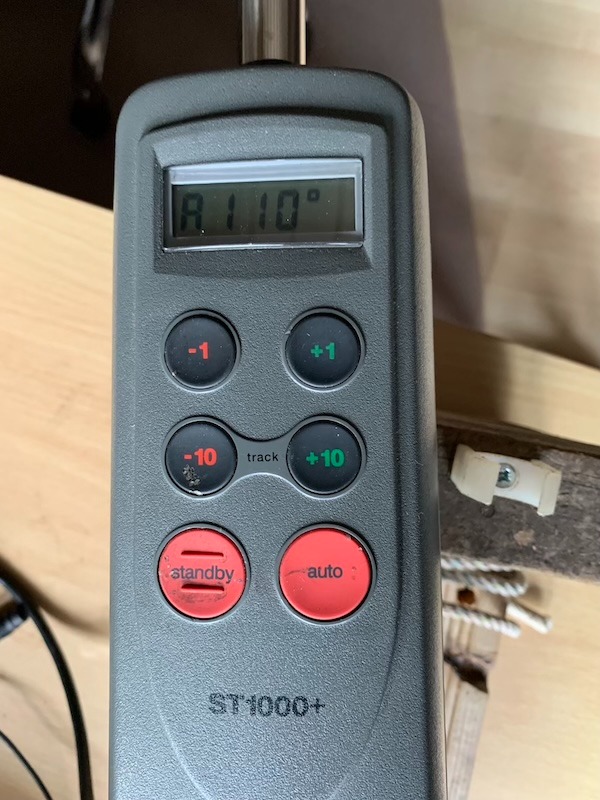
SeaNav (v5.5 build 8 or later) running on an iPhone is connected to the Tiller pilot via SEATALK over Wifi using an NMEA3WIFI gateway. The current boat’s heading is 110° and we are in Auto mode on the Tiller pilot maintaining that heading.
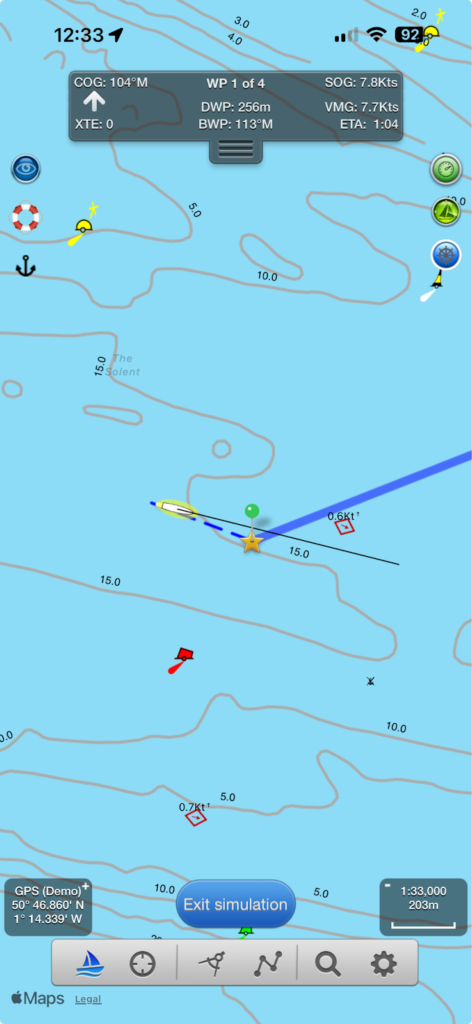
We start sailing the route in SeaNav by tapping the sailboat icon bottom left, note the BWP (Bearing to the first Waypoint is)  at the top centre of the screen is 113°.
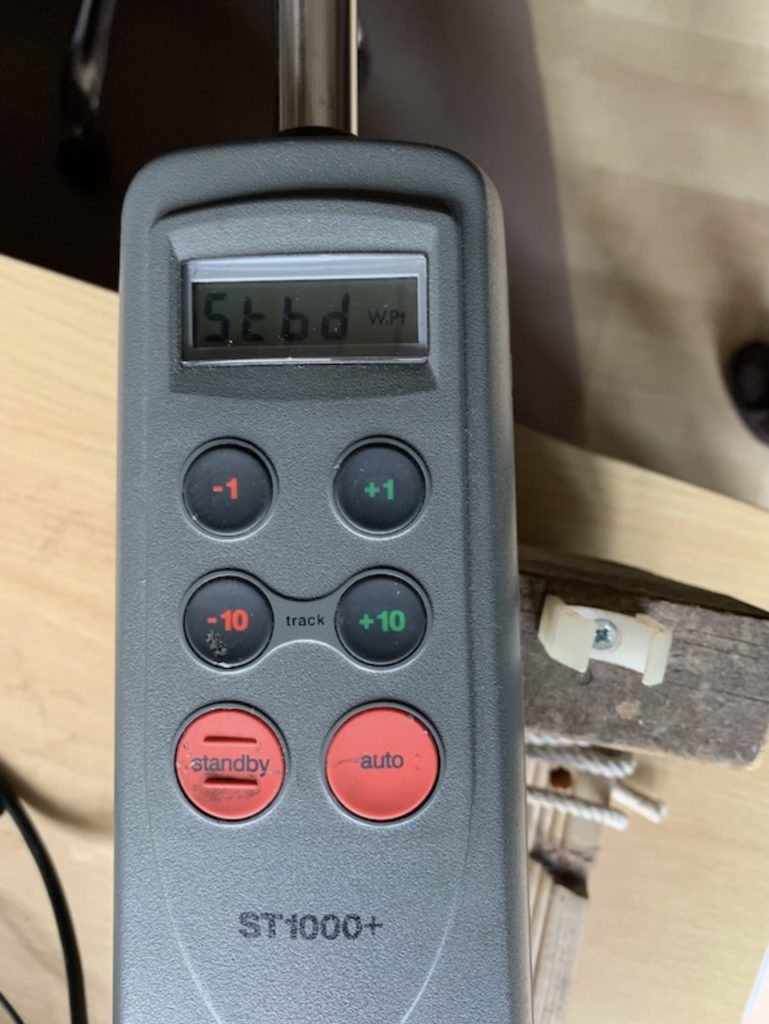
SeaNav tells the autopilot the course to steer to the first Waypoint from our current position. As the BWP is 113° and the boat  is currently sailing 110° the tiller pilot tells us it needs to change course (it beeps) and shows us which way it is going to turn;  to Starboard on a new course heading of 113°.
and automatically turns the boat to head in that direction. The tiller pilot shows us the distance to the 1st Waypoint is now 0.1nm using the information from SeaNav.

We reach the 1st waypoint and SeaNav tells the tiller pilot we need to change course again to Waypoint 2. The tiller pilot sounds the Waypoint changed alert and shows us the new course , the direction it is going to turn (to port) and turns to it.

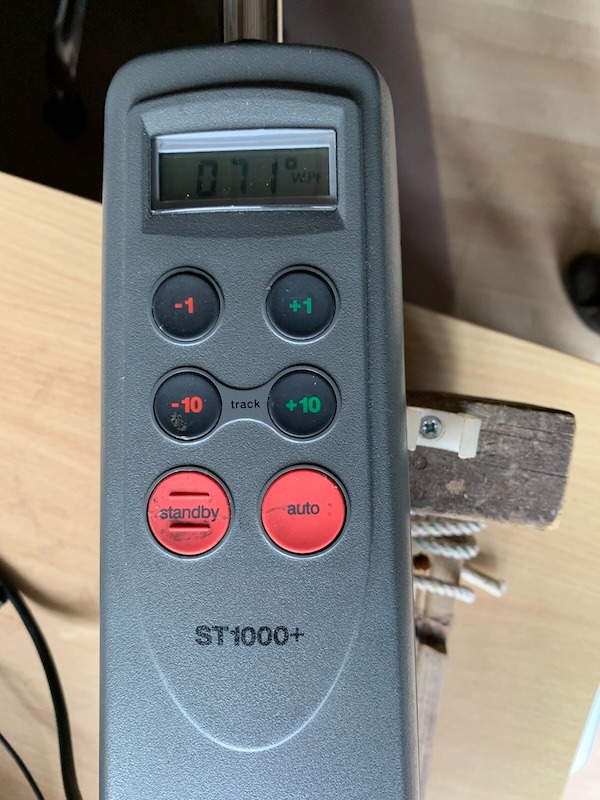
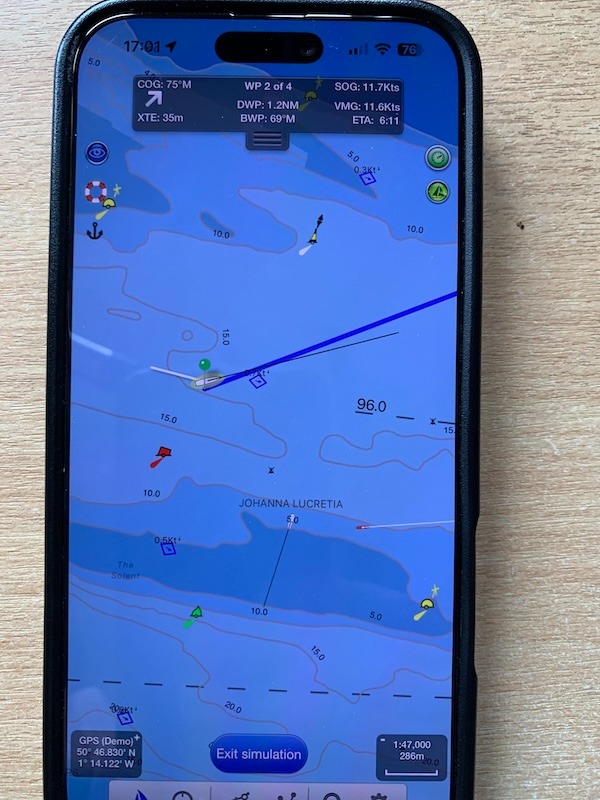
The tiller pilot changes our boat’s heading ( simulated by rotating the tiller pilot on the desktop)  until we are lined up with 71° (note the t in front of the course showing it is in tracking mode). The tiller display then continually cycles through the new course information showing us the course, off track error and distance to the second waypoint (DWP) 1.2nm updated by SeaNav as we sail towards waypoint 2.
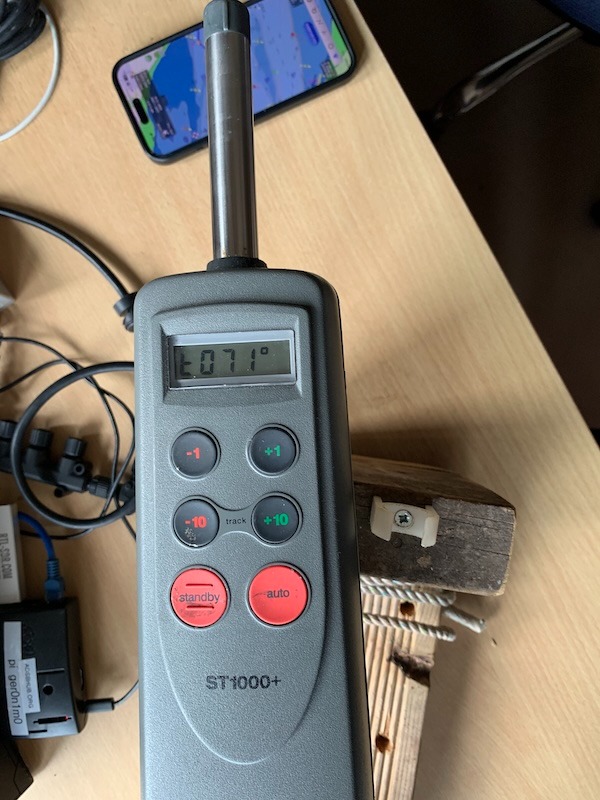
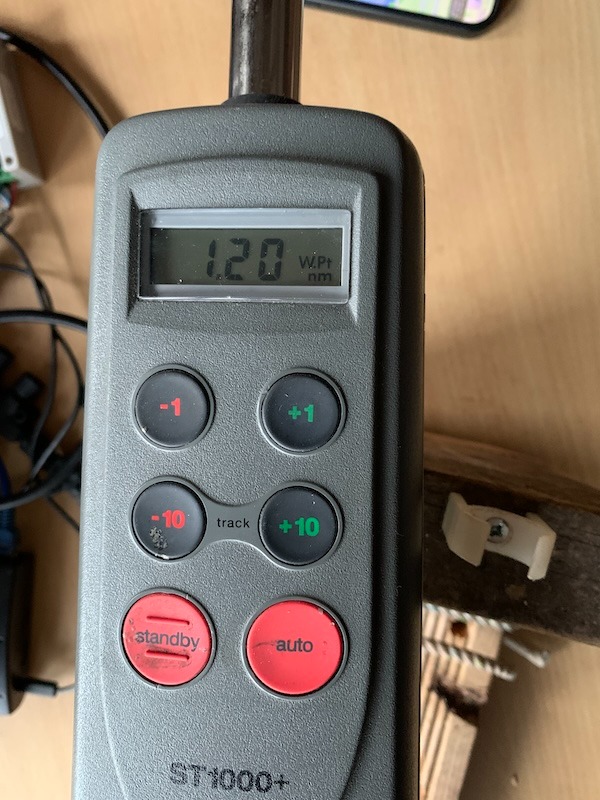
and here we are heading for Waypoint 2 in SeaNav.

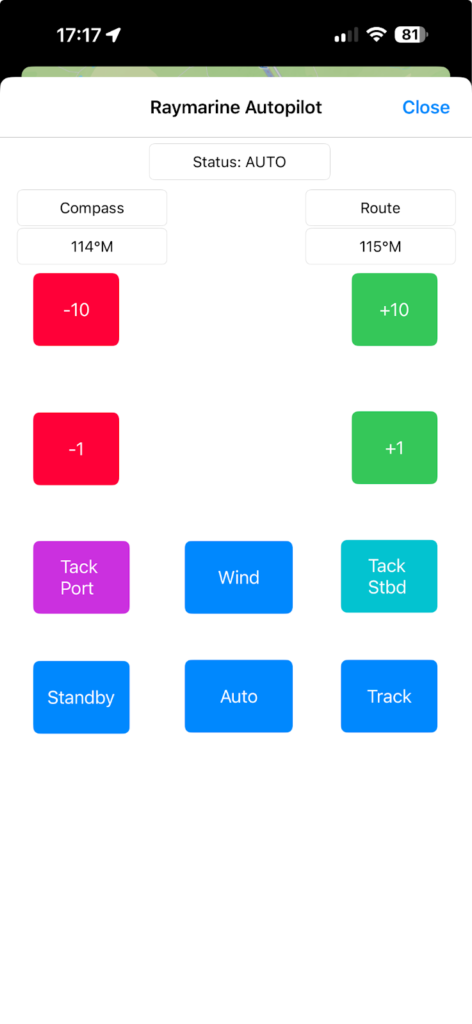
SeaNav can also remotely control the Auto tiller buttons and view its status (tap the autohelm button towards the top right of the screen in SeaNav to show the remote control buttons and Autopilot status) :-
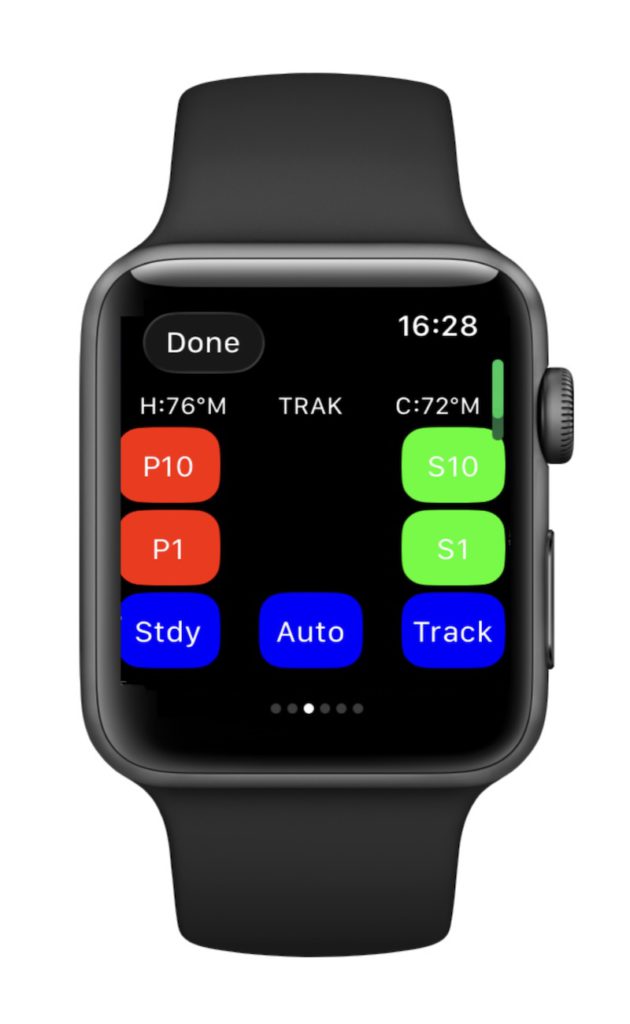
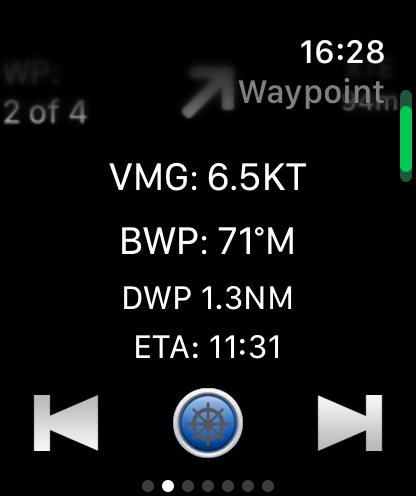
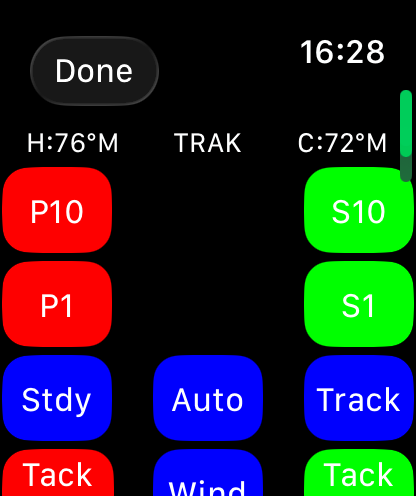
The SeaNav Apple Watch can also control the Raymarine AutoPilot. Tap the autopilot symbol (blue bottom centre) on the Waypoint watchface to view the AutoPilot status and controls:-
Setting up SeaNav to use a Raymarine AutoPilot with the NMEA3WIFI device.

Hardware setup

Raymarine ST1000+ and 2000+

Only 3 wires need to be connected, Yellow SeaTalk, 12V brown (+ve) and blue (-ve).

The Raymarine ST1000+/20000+ Tiller pilot has 5 wires in its connecting cable – brown, blue, yellow, green and white. 
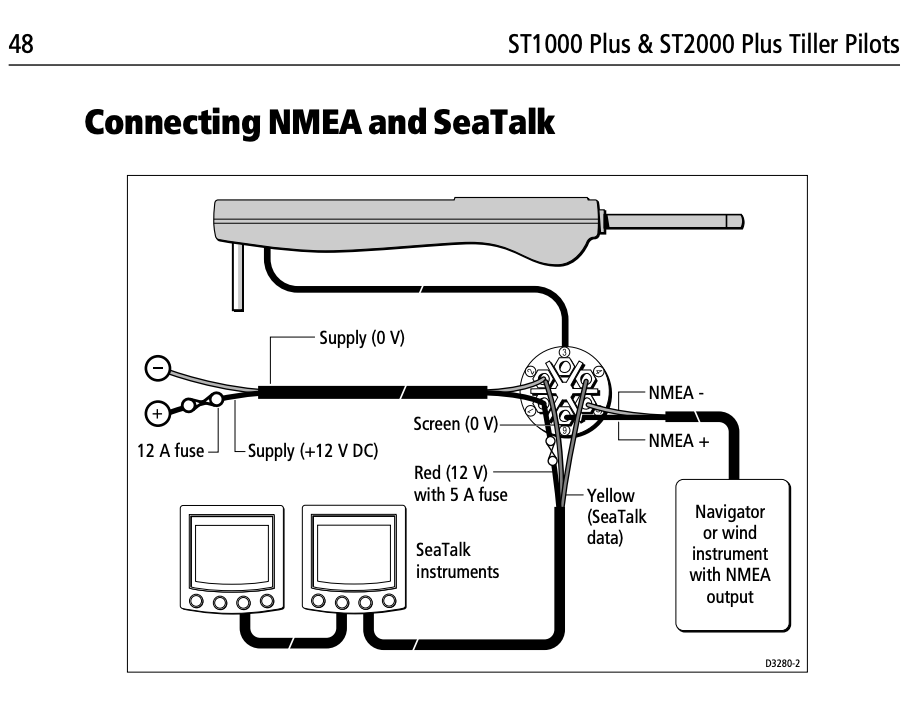
Connect the yellow SeaTalk wire/terminal(4)  from the Raymarine Autohelm/tiller to the Data terminal (3rd in from the left) on the NMEA3WIFI.

Connect 12V and GND on the NMEA3WIFI to the 12V brown (+ve) and blue (-ve) auto tiller power leads or boat supply (pin 1 +and 2 -). 

Raymarine ST4000+
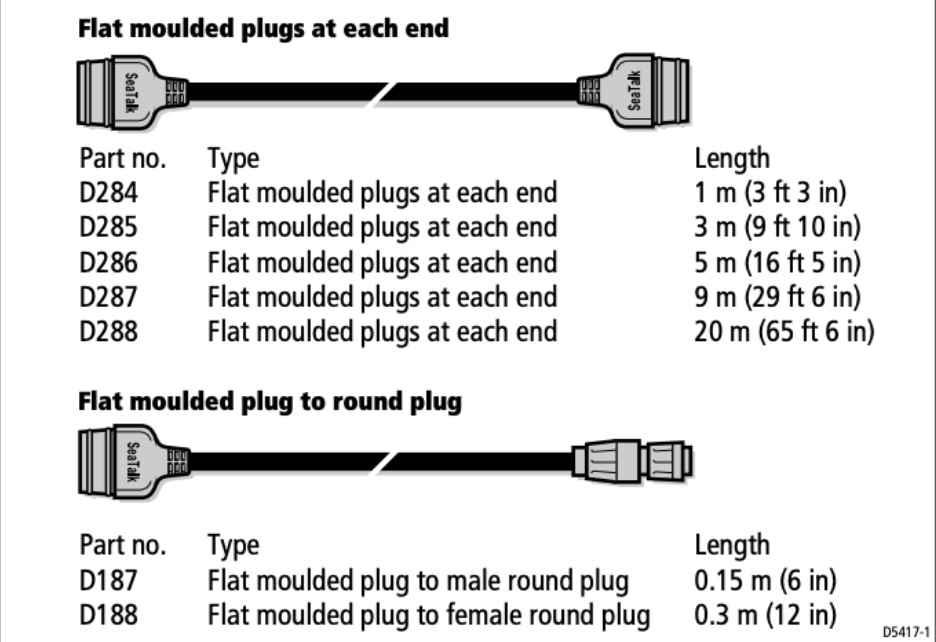
Connect the NMEA3WIFI to 12V and the SeaTalk bus using a SeaTalk cable from the control unit rear as above. The correct part number for the cable with a connector one end and bare wires the other is D229 (also Rul-4001-136-A). You can use a SeaTalk cable and cut a connector off one end. The SeaTalk cable data wire is yellow, the + and – 12V wires are usually red  (+ve) and black (-ve/gnd).

NMEA3WIFI configuration

You need to have Version 2.9 or later of the firmware to work correctly with iOS*. You can get the latest firmware from here:-

https://www.vela-navega.com/forum/viewtopic.php?t=290&sid=20a9808ab3ef6544d96d82ff35e1b656

You can auto-configure the NMEA3WIFI with one tap directly from SeaNav. Make sure your iPhone is connected to the NMEA3WIFI network in your device Wifi Settings. Open SeaNav and go to Settings/Advanced Settings and then tap the bottom line. It will let you know if its successfully updated the NMEA3WIFI settings for you. You are then ready to start using it and can skip to the next section “iPhone and SeaNav configuration”

Screenshot

Alternatively you can configure the NMEA3WIF manually. Connect to the NMEA3WIFI by connecting to the NMEA3WIFI network and browsing to 192.168.4.1 in Safari or Chrome. On the Home page change the SSID to NMEA3WIFI:NG so that it will work correctly with iOS*. 

You can also set the NMEA3WIFI to access via your local Wifi network (External network ) but this is not a necessity.

We need to set the gateway to receive commands via TCP from SeaNav and send them out over Seatalk and receive SeaTalk messages from the AutoPilot and send them out back to SeaNav. Set the SEATALK1 PORT SETTINGS as below ( ST->TCP).

You also need to set Additional Settings for the ST out to let SeaNav see the Raymarine Autopilot status information. Change the ADDITIONAL SEATALK1 SETTINGS from 0: Default to 1: ADD SOME $STALK and then tap SAVE and RETURN. See screenshot below.

Set the WIFI PORTS SETTINGS on the HOME page to 2001 for TCP and set TCP->ST so SeaNav can send proprietary SeaTalk data to the Autopilot. 

*The :NG  suffix allows the iPhone/iPad to use cellular data for the internet at the same time as it is connected to the NMEA3WIFI network.

iPhone and SeaNav configuration

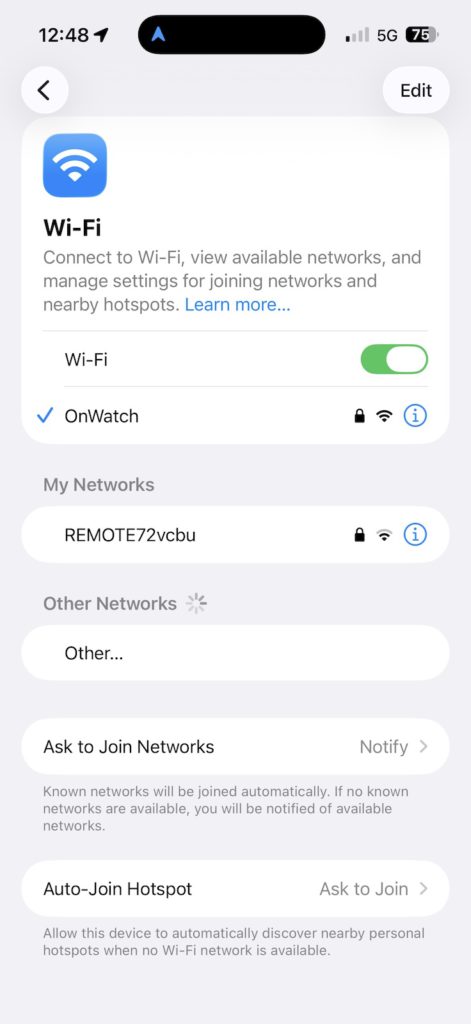
Set the iPhone to use the NMEA3WIFI:NG wifi network and connect to it. Check it is connected by browsing to 192.168.4.1 in Safari to see the NMEA3WIFI Home page. 

Now configure SeaNav to talk and listen to the AutoPilot. Go to Settings/AIS, GPS & NMEA Link .
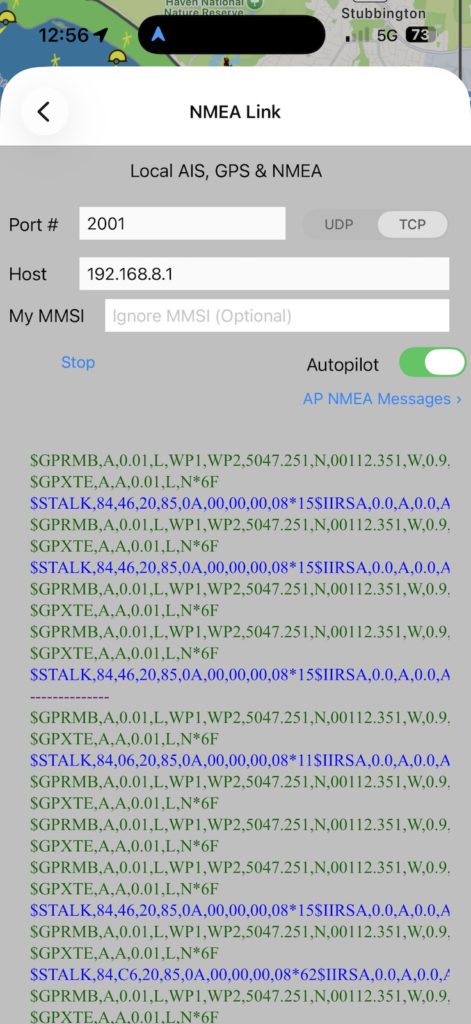
Configure it to use TCP to IP address 192.168.4.1 , port 2001 (theTCP port number we just set on the NMEA3WIFI). Set the AutoPilot switch on. If the hardware is all connected up you can tap Start and should see live data from the AutoPilot (via the NMEA3WIFI). Blue for received messages and green for sent.

You are now ready to sail a SeaNav route automatically. Just start sailing a route or to a point by tapping the Sailboat icon. If you want to disconnect SeaNav from the Autopilot tiller/helm tap the Standby button on the autopilot. Re-connect to the SeaNav route by tapping the Auto button. To completely disconnect, turn off the Autopilot switch in SeaNav Settings/AIS, GPS & NMEA Link or stop the link.

Setting up SeaNav to use a Navico (B&G,Simrad,Lowrance) auto tiller/helm or any other NMEA compliant autopilot.

Use an N2K0183 gateway to connect SeaNav to the Autopilot via Wifi and NMEA2000 or NMEA0183.

Hardware set up.

NMEA2000

Connect the N2K0183 to your NMEA2000 bus.

NMEA0183

Use the output from P2 (A2/B2) on the N2K0183 board to connect to the RX +/- inputs on the Autopilot. Connect the autopilot TX +/- (if available) to the P1 A1/B1 port connections. 

N.B. A is equivalent to + and B to -.

N2K0183 configuration

You need to have Version 28 or later of the firmware* to work correctly with iOS. You can get the latest firmware from here:-

https://www.vela-navega.com/forum/viewtopic.php?t=443

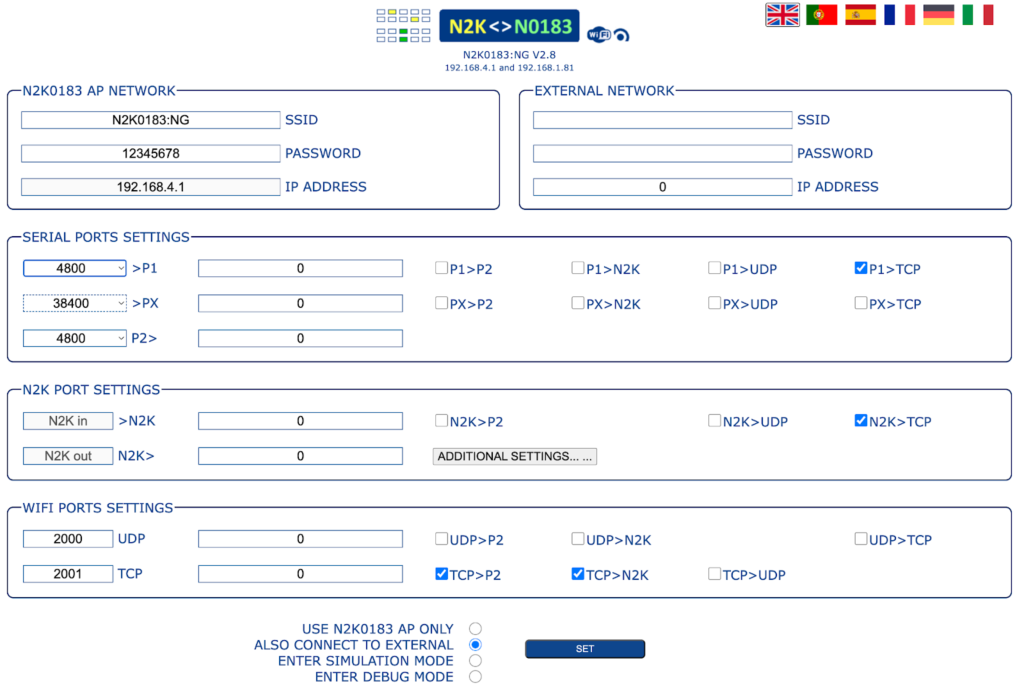
Connect to the N2K0183 by connecting to the N2K0183 network and browsing to 192.168.4.1 in Safari or Chrome. On the Home page change the SSID to N2K0183:NG so that it will work correctly with iOS and reconnect to it.

You can also set the N2K0183 to access via your local Wifi network (External network ) but this is not a necessity.

The configuration below works with NMEA2000 and NMEA0183. For NMEA0183 ensure the Serial port setting baud rates for P1 and P2 match the baud rate on your Autopilot. In the example below they are both set to 4800.

iPhone and SeaNav configuration

The same as for Raymarine above except to connect to the N2K0183:NG Wifi network.

N.B. There is no remote button control capability for Navico autopilots like there is with Raymarine.

SeaNav on the Apple Watch

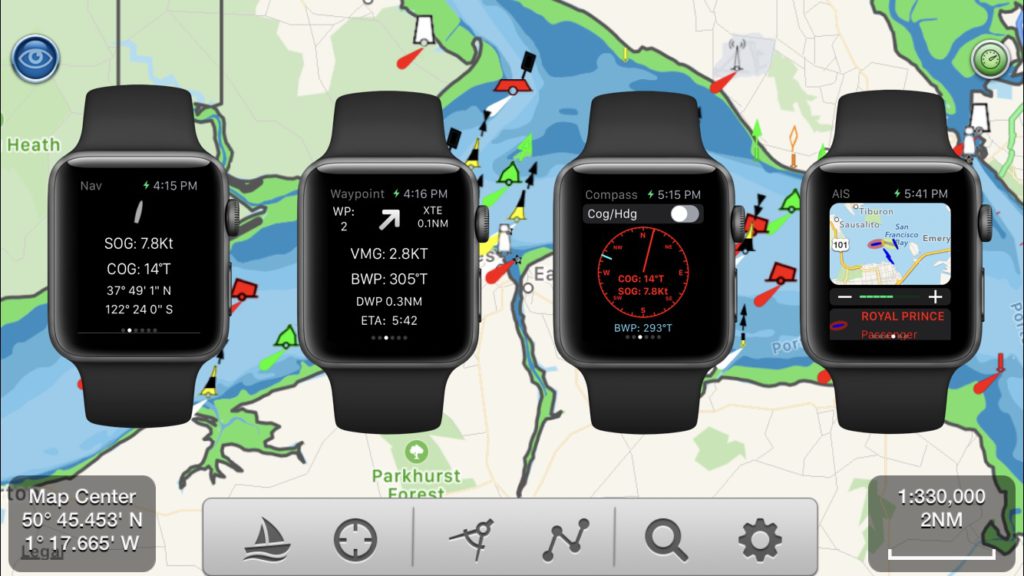
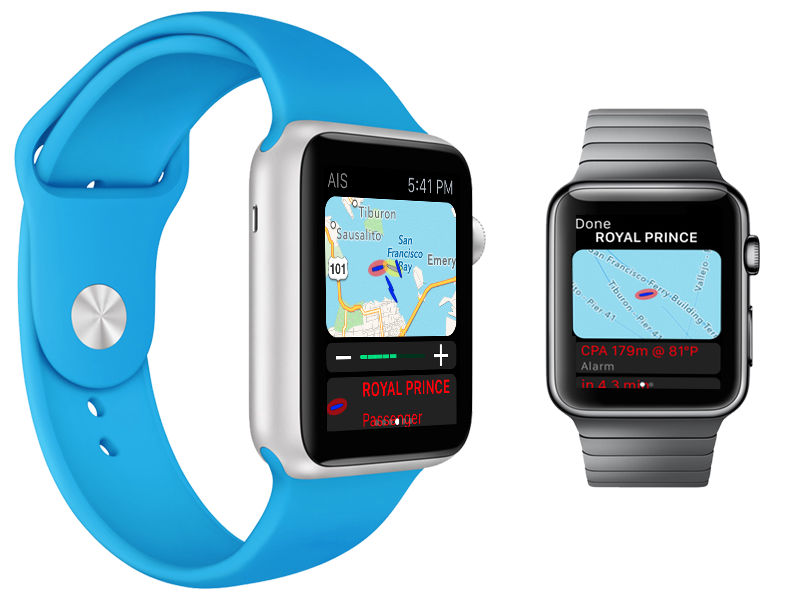
Unlike other Marine Navigation apps on the AppStore, SeaNav comes with a really useful and free Apple Watch App which shows live navigation information, waypoints, compass, wind display and AIS radar. Waypoint reached and CPA (AIS collision) alerts also show up on your Apple Watch.

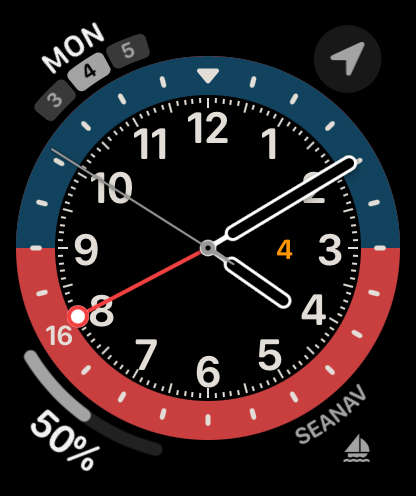
You can add a launch complication for SeaNav to your main Watchface, so you can tap and go straight to SeaNav.

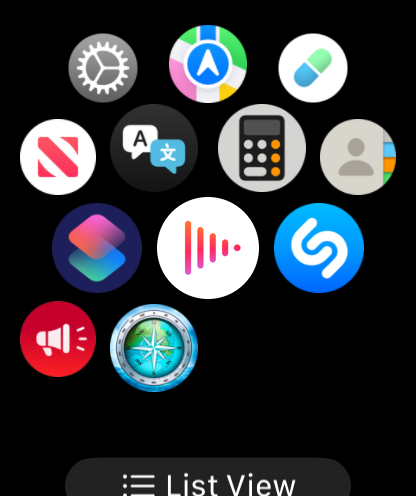
You can also launch SeaNav by tapping its icon in the Apps view on the watch

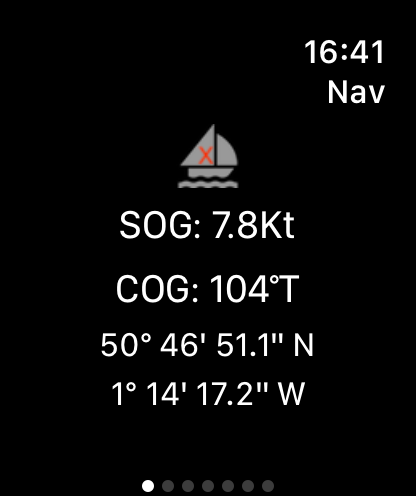
Stop and start sailing a route by tapping the boat icon with the cross on it.

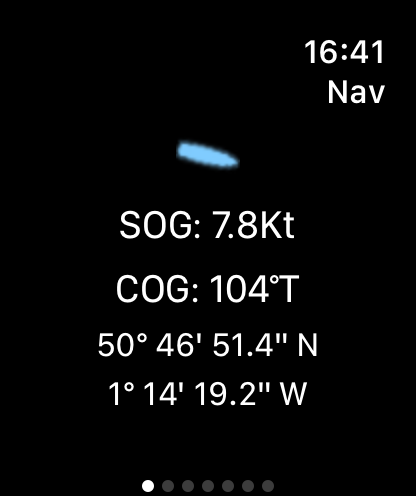
SeaNav is now Sailing the currently selected route with the boat symbol showing the heading. SeaNav on your iPhone will also now be in Sailing mode recording your track etc.

Navigation display

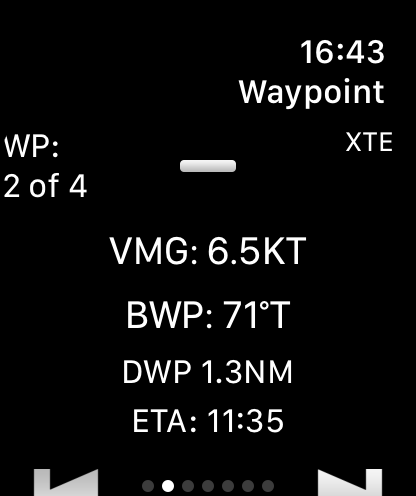
Swipe left to view the WayPoint display. This shows the current Waypoint number, Cross Track error (XTE) and direction to turn to get back on track , vector made good (VMG), bearing to waypoint (BWP) and distance to Waypoint (DWP). You can jump to the previous or next waypoint using the arrows at the bottom of the screen.

Waypoint display

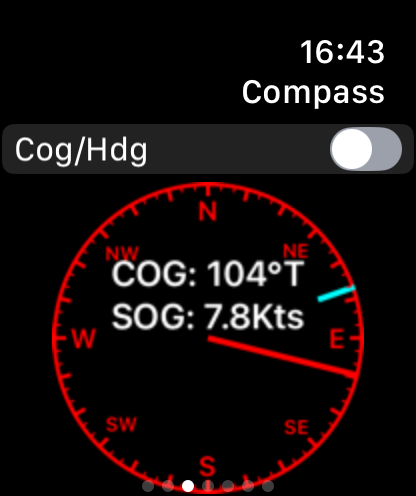
Swipe left again to view the compass showing heading (or course over ground (cog)) with a blue line showing the route direction.

Compass display

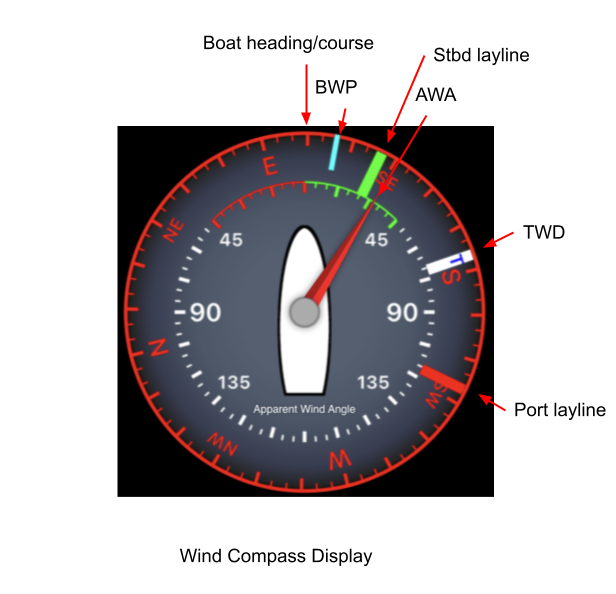
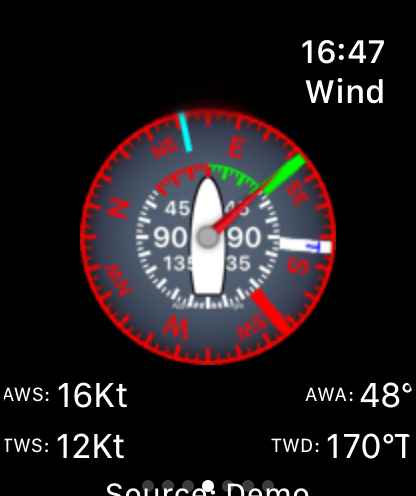
Next up is the wind display. This shows a compass with boat heading up, true and apparent wind direction plus the port (red) and starboard (green) laylines ( for sailing). The bearing to the next waypoint is also shown in light blue. The wind display can either use NMEA wind data from a wind instrument on board via Wifi or the current local wind data from the SeaNav live internet weather service (IAP).

Wind display

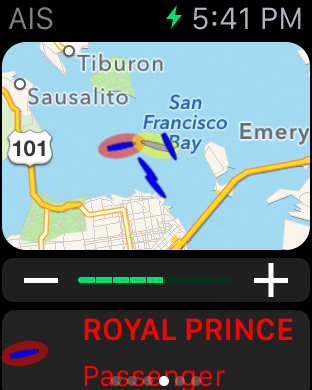
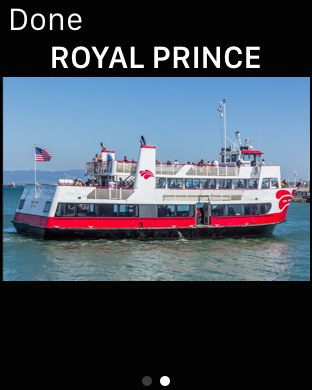
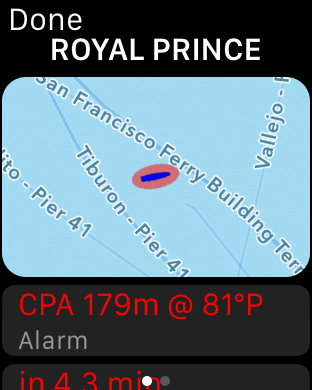
Finally you can check the boats around you with the AIS Map display. CPA boats are shown with a red circle on the map and in red in the scrollable list below. Tap on an item in the list to get more info and a photo.

AIS Map display.

You can try all these features for free in simulation mode with the SeaNav app which is free to download from the AppStore.

“Hey Siri, Man Overboard”

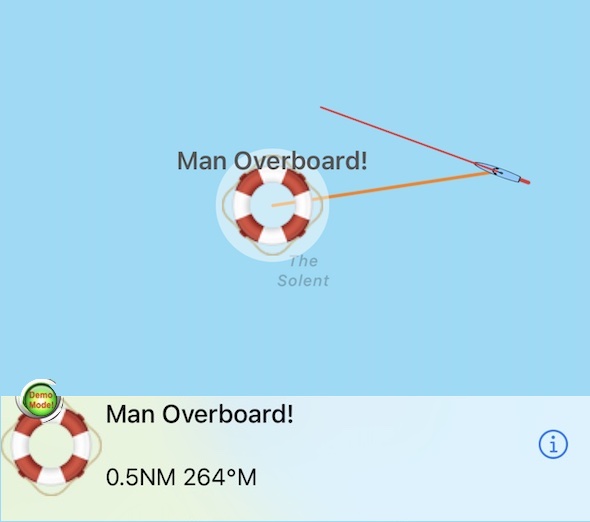
As the new boating season starts we have added a new, unique and useful feature for our popular Boat Beacon app – “Hey Siri, Man Overboard”

Boat Beacon now supports several Siri voice commands which you can use with your device or on your Apple Watch (requires iOS 12 or later and WatchOS7 or later). This lets you use Boat Beacon’s features hands free. The current list of voice commands are:-

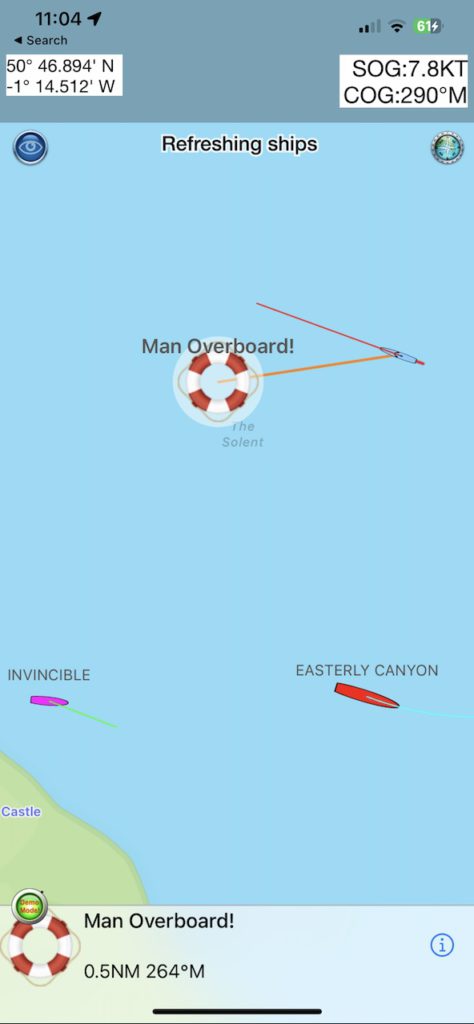
  1. “Man Overboard “- Toggles Marking and tracking a man overboard position with Boat Beacon
  2. “Start Sailing” – put Boat Beacon into “On boat” mode. Same as tapping the Sailboat icon bottom left 
  3. “Finish Sailing” –  Turn off Boat Beacon “On boat” mode.
  4. “Drop Anchor” – Mark your anchor position and set a drift zone around it.
  5. “Up Anchor”- removes the Anchor watch.
  6. “Navigation status” – report current speed, course and heading.

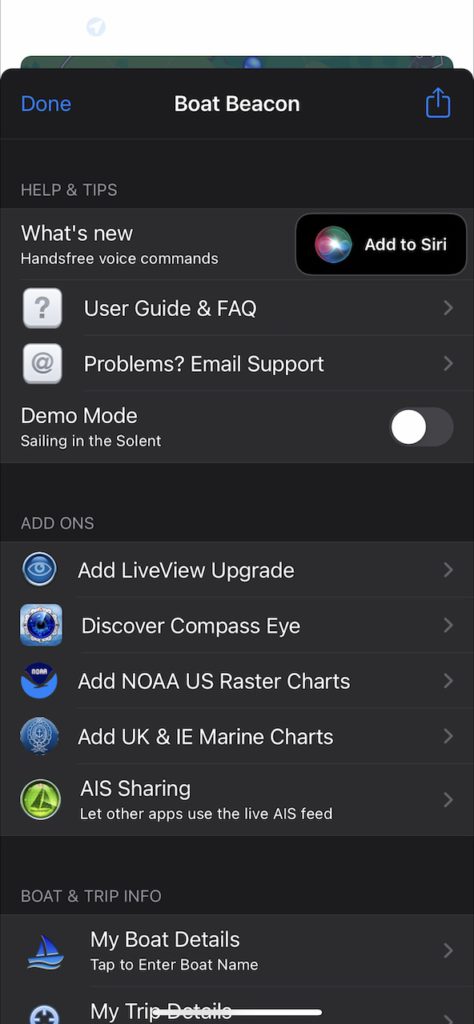
You can add the commands to Siri from the Boat Beacon app in settings or directly in the Siri App itself. They work directly with Siri without having to mention “Boat Beacon” in the command. You can also customise the commands to respond to your own preferred phrases or language.

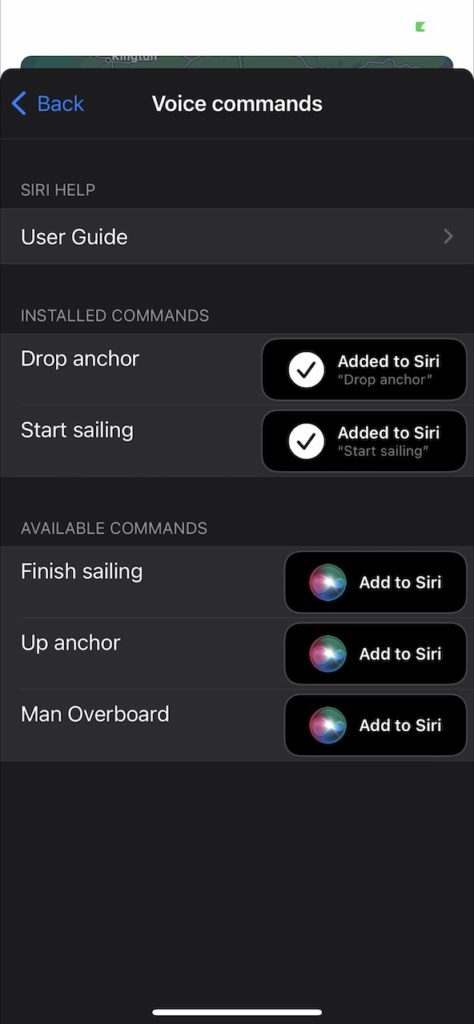
Tap the Add to Siri button in Boat Beacon settings to see the list of commands that are active and more that you can add. “Drop anchor” and “Start sailing” have been added in the screenshot. To add another command just tap its “Add to Siri” button. Once added you can ask Siri to do them at any time on your device or your Apple Watch.

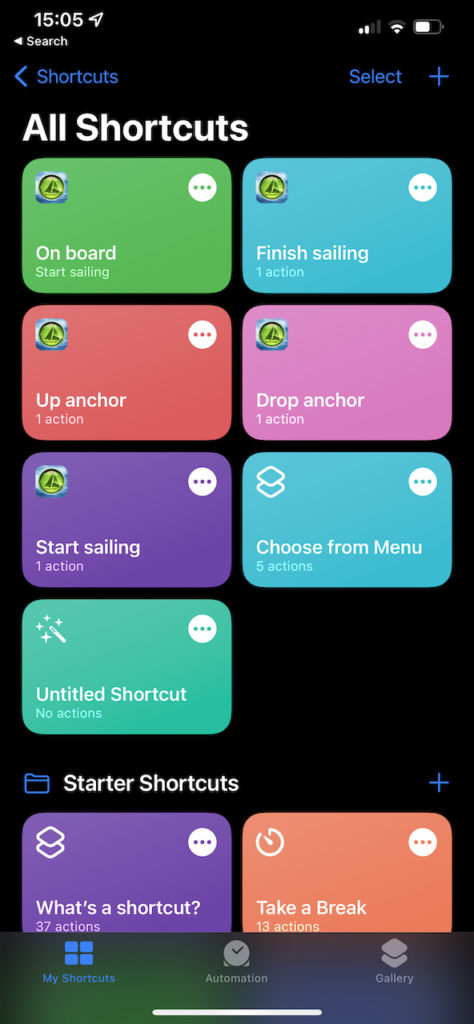
You can also edit the commands that have been added by tapping the “Added to Siri” button next to them and add additional speech commands to launch them. For instance add “On board” as an addition/alternative to “Start sailing. You can type the phrase or enable dictation and speak it. Useful also for setting phrases in other languages or using alternative phrases that Siri finds it easier to understand.

You can view and delete the commands in the Siri Shortcuts app on your phone. Once added the commands work automatically on your Apple Watch, no more set up required. If you want to see them in the actual Siri app on your Apple Watch as well then you can set “Show on Apple Watch” in the Shortcut settings in the Siri app on your phone.

Try it now. Add “Man Overboard” and then say “Hey Siri, Man Overboard” to your iPhone/iPad or your watch. It will sound an alert,  mark the position and start tracking it for you.

Say “Man Overboard” again to clear the alert. N.B. This will still leave Boat Beacon in sailing mode.

There is a User guide in the app and online here:-

https://boatbeaconapp.com/ais/SiriHelp/SiriHelp.html

Boat Beacon and SeaNav Apple Watch App tips

Here are some tips/pointers from our initial experience of using the Apple Watch with our Boat Beacon app.

1. By default the Apple Watch shows a watch face when you raise your wrist to look at it. If you want to see your nav data on Boat Beacon you have to press the crown and select Boat Beacon. This is really annoying when you want to see your navigation information at the flick of your wrist. Fortunately there is an option in the Apple Watch app on your iPhone to ensure the Boat Beacon app (or whichever app you were using last ) stays on top – its in My Watch/General/Activate on Wrist Raise/Resume Previous Activity  – make sure this is ticked.

2. You need Boat Beacon on your iPhone/iPad to be in Sailing mode (Sailing button bottom left selected) to get  SOG, COG , Heading and CPA/AIS information on Boat Beacon’s watch app display. The same applies to our SeaNav Watch app which also has a Waypoints display.

3. iPhone Battery is draining much faster when SeaNav or Boat Beacon app has been run on  my watch even though it is no longer being displayed on the watch and I am not running the apps on my phone/iPad.

The problem is that when you launch the SeaNav or Boat Beacon watch app (or in fact any app that needs gps) on your watch it stays running even when its not showing on the watch face and/or another app (e.g. the clock) is showing. As it is running it will keep asking the iPhone for gps info which will eat battery on your iPhone. The solution is to “Force stop” the SeaNav app on your Watch when you have finished using it. Here’s how to do this:-

With the SeaNav/Boat Beacon app showing on your Watch screen press and hold the side button below the Digital Crown for a few seconds. The next screen you see features buttons for Power Off, Power Reserve and Lock Device. When you see this screen press and hold the side button again until you see SeaNav disappear and be replaced by the home screen.  There are more instructions for how to do a force stop here

We need a way to exit the SeaNav app on the watch more easily – either from the iPhone or more directly from within the SeaNav app running on the watch. This appears to be a mistake/oversight by Apple (a lot of folks with fitness and cycling apps are complaining to Apple about battery drain) and hopefully they will address it in a future release.

Just remember to force quit it on your Watch when you don’t need it running.

4. The wrist torch mode doesn’t work – looks like Apple won’t let the watch show a blank white screen (it worked in the simulator). We will take a look at how to get this working. For now you can use the AIS Map display to shed some light in the dark.

5. The watch screen is polarised to reduce glare and visibility is good on a bright day.  Apple have got the polarisation right – just like on instrument displays on aircraft –  it works fine with Polarised sunglasses. We tested with a pair of my son’s Ray-Ban Aviators and we could see the watch face fine. seanav-watch